Boiler Repair Basics: Restore Heat and Hot Water Fast
Boilers are the quiet heroes of winter. You barely notice them—until you wake up to icy tiles and a cold shower. Suddenly, every minute without heat feels like an hour. If your boiler stops working, life screeches to a halt.
At Expert Plumbing, we know how urgent a broken boiler can be. Our licensed team handles everything from emergency plumbing calls to complex repairs, so you’re never left in the cold. Here’s what every homeowner should know to restore heat and hot water fast, stay safe, and make smart decisions under pressure.
Common Boiler Issues 😬
Boilers are tough, but they’re not invincible. Here are the most frequent problems homeowners face:
- No heat or hot water: Usually caused by thermostat issues, broken valves, or low pressure.
- Leaks and drips: Water pooling under the unit could mean internal failure or corroded pipes.
- Strange noises: Banging, gurgling, or whistling can signal air in the system or limescale buildup.
- Pilot light keeps going out: Could be a broken thermocouple or gas supply problem.
- Pressure problems: Both high and low pressure can shut the system down.
If you spot any of these, don’t ignore them. Small problems can snowball into big emergencies, especially in the dead of winter.
Quick Safety Checklist
Before you touch anything, pause. Boilers are powerful—and can be dangerous if mishandled.
- Smell gas? Evacuate immediately. Call your utility provider from outside. (Never try to fix a gas line yourself.)
- Check for water leaks: Mop up standing water and keep kids and pets away.
- Turn off power: If you suspect an electrical fault, switch off the boiler at the breaker.
- Don’t open panels: Internal parts are hot and under pressure.
- Ventilation matters: Make sure vents and flues are clear—blocked airflow can cause carbon monoxide buildup.
Remember: gas appliances must be repaired by licensed professionals under local and national safety codes (see the National Fire Protection Association for guidance).
Quick Diagnostic Steps
You don’t need to be a plumber to do a few safe checks:
- Thermostat: Is it set correctly? Sometimes a simple bump resets the whole system.
- Boiler pressure gauge: Most home boilers operate between 1–2 bars. If it’s too low, your system may lock out.
- Power supply: Make sure the breaker hasn’t tripped.
- Pilot light: Is it lit? If not, check your owner’s manual for safe relighting instructions.
- Radiators cold? Bleeding trapped air can help—just use a radiator key and a towel.
If these steps don’t bring heat back, it’s time to call for help.
DIY vs. Call a Pro
Some fixes are safe for homeowners. Others are not.
OK for DIY:
- Adjusting the thermostat
- Resetting the breaker
- Bleeding radiators
- Checking for obvious obstructions on vents
Call a professional for:
- Gas leaks or smells
- Persistent leaks or dripping water
- Repeated loss of pressure
- Strange noises after bleeding radiators
- Replacing parts or opening the boiler
Licensed plumbers have specialized tools and training. They’re required by law to handle gas line installation, boiler repair, and leak detection. Attempting these repairs yourself can void warranties and put your home at risk.
What Pros Do On Arrival 🧰
A professional plumber doesn’t just guess. Here’s what you can expect:
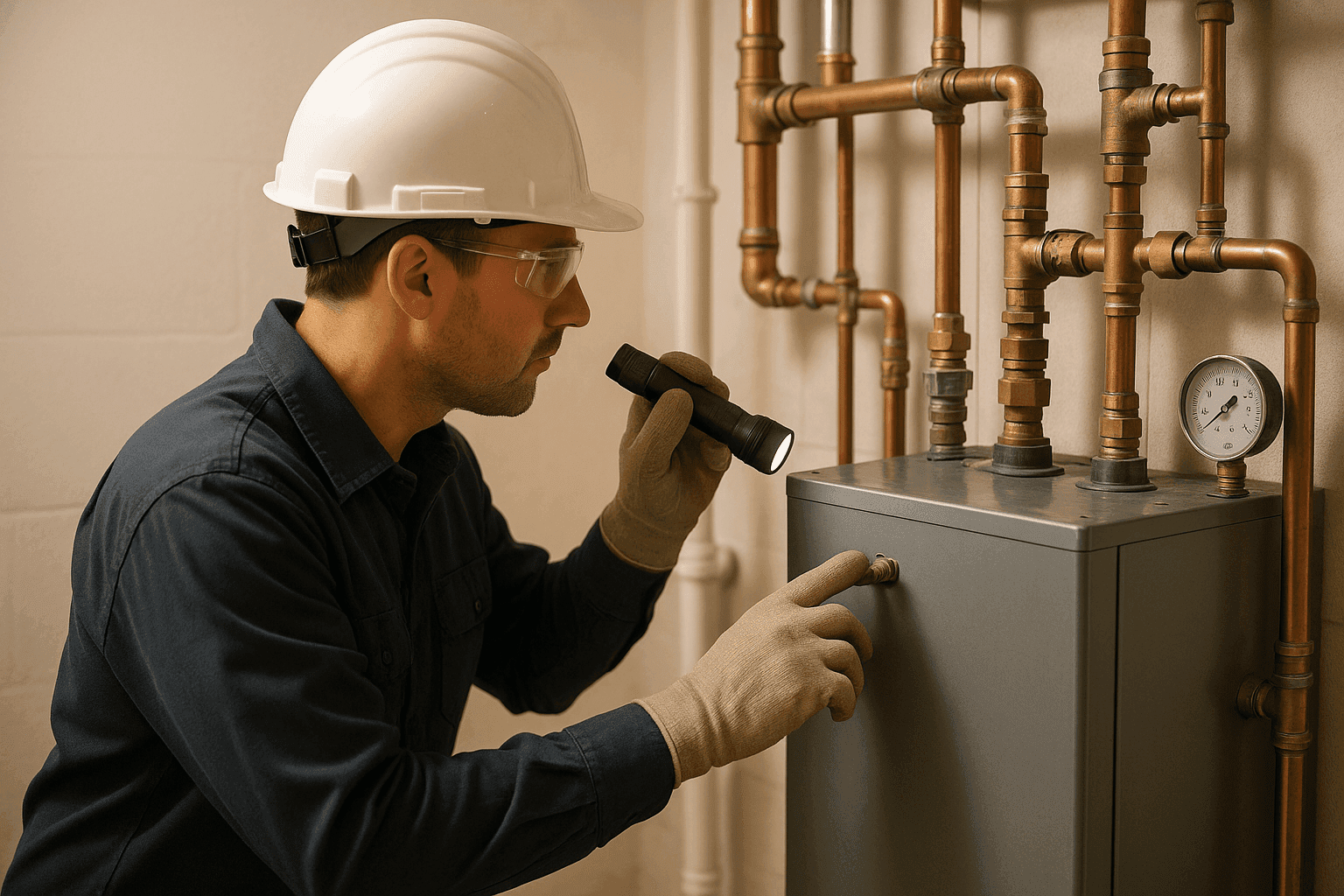
- Thorough inspection: From the boiler case to the smallest pipe, every part is checked for faults.
- Diagnostic testing: Pressure, flow, and electrical tests pinpoint the root cause.
- Safety assessment: Gas lines and ventilation are checked to meet code.
- Targeted repair: Faulty parts are replaced, leaks sealed, and the system tested before leaving.
- Advice: Clear explanations on what happened and how to prevent it next time.
If your system is old or repeatedly failing, your plumber may recommend a full replacement. They’ll explain the options, including energy-efficient models and upgrades to your water heater or gas line.
Prevention & Maintenance Tips
A little attention goes a long way. Regular maintenance helps your boiler last longer and keeps energy bills down.
- Annual inspections: Have your boiler professionally serviced every year—especially before winter.
- Bleed radiators: Once a season, release trapped air for even heating.
- Check pressure: Inspect the gauge monthly.
- Look for leaks: Catching small drips early prevents costly water damage.
- Clear vents: Make sure nothing blocks airflow inside or outside your home.
The U.S. Department of Energy recommends preventative maintenance as the best way to avoid emergencies and improve efficiency.
Costs & Time Factors
Boiler repairs aren’t one-size-fits-all. Costs depend on the problem, the parts needed, and the time of year. Emergency plumbing calls—especially after hours or on holidays—may carry higher rates.
- Minor fixes: Thermostat replacement and air bleeding are often quick and less expensive.
- Complex repairs: Replacing a pump, valve, or major pipe takes longer and costs more.
- Full replacements: New boilers or extensive repiping are larger investments with longer timelines.
Most repairs can be completed within a few hours, but sourcing rare parts may take longer. Always ask your plumber for a time estimate before work begins.
When It’s an Emergency 🚨
No heat in winter? That’s an emergency—especially for families with kids or elderly residents.
- Burst pipes: Can flood your home in minutes.
- Gas leaks: Require immediate evacuation and professional repair.
- Total boiler failure: Leaves you without heat and hot water, risking frozen pipes and health issues.
If you’re facing any of these, don’t wait. Search for "emergency plumbing near me" and call for immediate help.
FAQ
How often should my boiler be serviced?
At least once a year. Annual checks catch small issues before they cause breakdowns.
Is it safe to reset my boiler myself?
Check your manual. Simple resets are usually fine, but if the system keeps failing, call a licensed plumber.
What if I smell gas near my boiler?
Leave your home immediately. Do not use switches or phones inside. Call your gas utility from a safe place.
Can I install a new boiler myself?
No. Boiler installation and gas line installation must be performed by licensed professionals to meet safety codes.
Local & Seasonal Considerations
Winter is when your boiler works hardest—and is most likely to fail. Cold snaps can freeze pipes and strain old systems. Regular maintenance and quick repairs are essential in colder months.
If you live in an area with hard water, limescale buildup is a common culprit for noisy boilers and poor heating. Consider installing a water filtration system for added protection.
The Bottom Line
Boiler problems don’t wait for a convenient time. When you need emergency plumbing—whether it’s leak detection, water heater repair, or boiler troubleshooting—choose licensed, experienced professionals who put your safety first.
Call Expert Plumbing now — or reach us anytime at 877-837-7735 .